
COVID-19 Endangers Not Just Public Health, but the Constitution
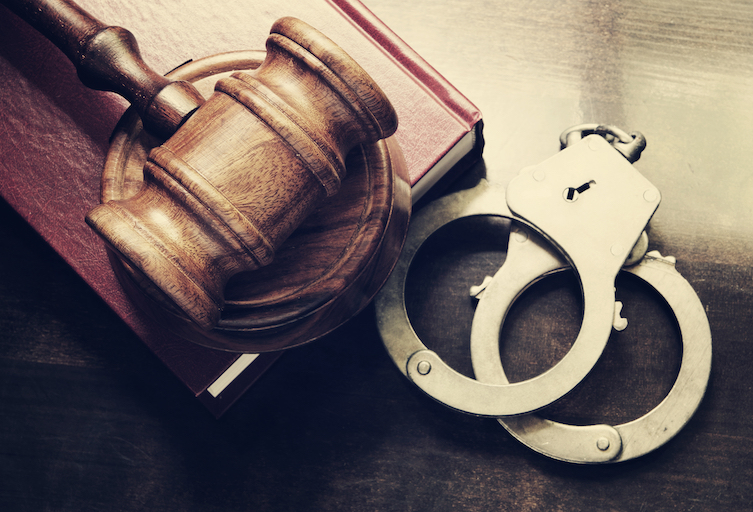
We are in the midst of a public health crisis, and many of the consequences of the social distancing it has necessitated are obvious: people are working from home, schools are closing, restaurants and businesses are shutting their doors. But some of the consequences may be less obvious—and are receiving less widespread attention. For example, for those currently imprisoned awaiting trial, COVID-19 may be endangering not only their health, but also their constitutional rights.
The Sixth Amendment to the U.S. Constitution provides that, among other things, “[i]n all criminal prosecutions, the accused shall enjoy the right to a speedy and public trial, by an impartial jury of the State and district wherein the crime shall have been committed.” The well-established right to a speedy trial was first articulated in writing in the Magna Carta in 1215. By the time the Framers included it in the Constitution, it had been recognized by lawmakers for centuries as an important pillar of individual liberty. The right protects a criminal defendant’s interest in avoiding a lengthy imprisonment prior to trial.
But in the age of coronavirus it can be dangerous to convene juries, the members of which are generally confined as a group in close proximity for days as they consider cases. Many jurisdictions are therefore suspending upcoming jury selection and trials. Although these measures are important for protecting jurors and court staff, the implications for criminal defendants’ Sixth Amendment speedy trial rights should not be ignored.
To be sure, what constitutes a “speedy trial” varies from case to case. The Supreme Court has identified four factors that courts should consider to determine whether a delay was appropriate: (1) the length of the delay, (2) the reason for the delay, (3) the defendant asserting the right, and (4) how much the delay has negatively affected that person’s case and defense. But courts are supposed to balance these factors for each particular defendant. Indeed, even the federal law that Congress passed to implement this constitutional right seems to contemplate that the appropriateness of any delays in trial should be assessed on an individualized basis. Yet most courts that have addressed the speedy trial right during the coronavirus crisis have issued or requested blanket waivers of the timelines attached to individuals’ rights. These broad proclamations, while certainly understandable, fail to engage in the individualized speedy trial assessment that the Supreme Court has suggested that the Constitution requires, and that Congress passed legislation to protect.
And that’s not the only Sixth Amendment problem the coronavirus presents. In addition to a speedy trial, the Sixth Amendment guarantees people the right to participate in their own defense. But coronavirus is resulting in increasingly limited access to visits in prisons and jails, including lawyer visits. When people who are incarcerated cannot meet with their lawyers, it becomes very difficult for them to participate in their own defense. And, of course, the prospect of staying in increasingly dangerous jails could cause people who would otherwise exercise their constitutional right to a trial to plead guilty to get out.
Courts across the country may be able to mitigate, at least in some cases, the problems of delayed trials by allowing people to go home pretrial, instead of incarcerating them as they wait out court closures. But there is no clear answer for how to balance individuals’ constitutional rights against the very real dangers posed by COVID-19 and the courts’ reasonable efforts to prioritize safe public health practices. While the answers may not be obvious, the problem should not be ignored: nothing less than important rights guaranteed in our national charter are at stake.